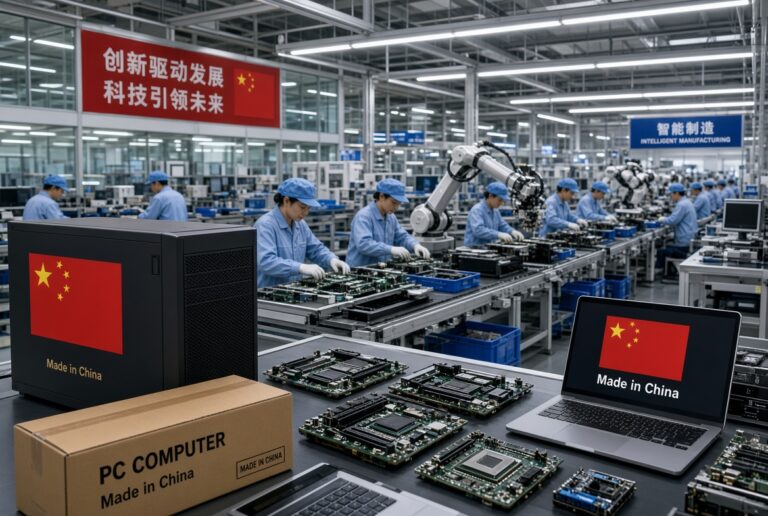
Chinese President Xi Jinping has announced that the Asian giant wants to completely reduce its dependence on foreign information technology and foreign computers.
An aggressive measure of technological protectionism that seeks to reduce or even eliminate technological dependence on foreign firms, and in turn seeks to take full control of the equipment and machines that are used throughout the country. Total control of everything is one of the hallmarks of the Asian giant.
One of the primary arguments for taking this drastic measure—which would entail discarding over 50 million computing devices—is cybersecurity, as well as the Chinese regime’s own desire for cyber-control.
Some security experts argue that the best cybersecurity measure for a country is to have complete control over the hardware—from top to bottom—and ensure there are no security vulnerabilities or backdoors.
Naturally, the American multinationals in the sector have not taken this announcement well, and accuse Beijing of protectionism. Some say it is a kind of “vendetta” for the Huawei case.
Chinese hardware companies such as Lenovo, Huawei or Inspur, as well as Chinese software companies such as Kingsoft or Standard Software, would take over from American software companies such as Microsoft or Adobe, and hardware companies such as HP or Dell.
Replacing computer-technological companies, world leaders, which have been operating for decades, with other local Chinese ones that are largely based on imitating or making substitutes for the original products?
Some believe that it is not possible to do it, or if it is, they will always be inferior products and at a disadvantage compared to the usual. Time will tell.